Canadian Sheep Identification Program Tags

The ability to identify and track animals as they are moved through the production system is one of the pillars of traceability. 

The Canadian Sheep Identification Program (CSIP) is an industry-led initiative that ensures animal identification for traceability in Canada’s sheep industry is affordable, flexible, effective, and compliant with legal requirements.

Under CSIP, all sheep and lambs moved off their farm of origin must be tagged with an approved, uniquely numbered ear tag. The numbers of all tags sold are recorded and linked in a database to the purchasers’ contact information. In Alberta, this database is currently maintained by the Canadian Cattle Identification Agency, which will transition to the Canadian Sheep Federation following changes implemented in 2025.

The database is only accessed by the Canadian Food Inspection Agency (CFIA) in the event a trace-back of animals or meat products is required. Read more on Livestock identification and traceability here

CSIP is a mandatory program that follows Canada’s livestock identification regulations.  These requirements are stipulated in the Health of Animal Act and associated Health of Animals Regulations. The Canadian Food Inspection Agency (CFIA) is responsible for enforcing these regulations.  Non-compliance could result in fines of up to $10,000.

For full details of the requirements, please read the following CFIA documents regarding livestock identification requirements (click to download the pdf documents):

All approved CSIP tags are radio frequency identification (RFID) enabled and bear the official CSIP logo. Shipping animals without an approved tag is illegal. Read more on this on the ALP’s CSIP fact sheet

Unused tags can be re-sold to other producers by officially transferring the tag numbers through CCIA.

Download the tag transfer form and contact the CCIA for more information.

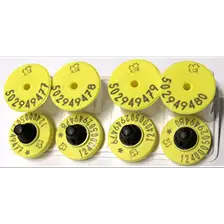
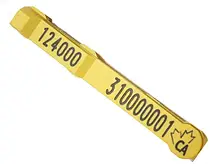
Yellow Shearwell Radio Frequency Identification Tag

YELLOW Shearwell Radio Frequency Identification tag

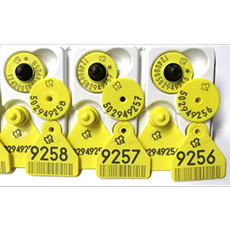
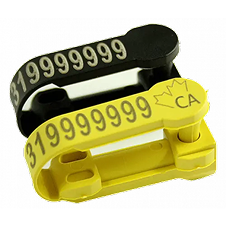
YELLOW Shearwell RFID Paired (Double) tag

YELLOW Shearwell RFID Paired (Double) tag

one RFID tag, one non-RFID tag with the same CSIP number
Both tags are applied to one animal.

YELLOW Allflex Radio Frequency Identification (RFID) button

YELLOW Allflex Paired (Combo) RFID and dangle

YELLOW Allflex Paired (Combo) RFID and dangle

one RFID button, one dangle tag with the same CSIP number

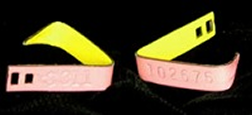
PINK Ketchum Kurl Lock #3

PINK Ketchum Kurl Lock #3

No longer available for purchase.
No longer accepted as a CSIP tags –
It is illegal to ship animals using only this tag.

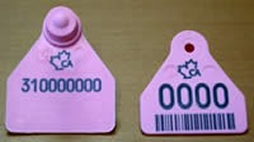
PINK Plastic Allflex dangle tag

PINK Plastic Allflex dangle tag

No longer available for purchase.
No longer accepted as a CSIP tag –
It is illegal to ship animals using only this tag.

Note:


Canadian Sheep Breeders Association link members may use a double tagging system with two tags approved and bearing the official identification number under the Canadian Sheep Identification Program as an alternative for tattooing registered sheep.

Buying CSIP Tags

The only official distributor of CSIP ear tags in Alberta is Canadian Cooperative Wool Growers in Lethbridge. Tags can be ordered over the phone or online.

Call 800-567-3693 or go to www.wool.ca to order tags.

Please note:  A PID number is needed to buy tags.

Tag fees and check off amounts are as follows:

ALP Check-off:

$1.50

/tag

CCIA Traceability (CSIP)

$0.19

CCIA fee

$0.40

Tag Performance

Download the Tag Assessment Form if you would like to submit comments regarding tag performance/quality control issues to the Canadian Cattle Identification Agency (CCIA) (email info@canadaid.ca) or phone (1-877-909-2333). Comments will be used in future tag assessments.

Shearwell Canada has tips for troubleshooting problems with Shearwell tag performance.

full gold separator

How To Tag

The right tag, the right applicator, the right ear.

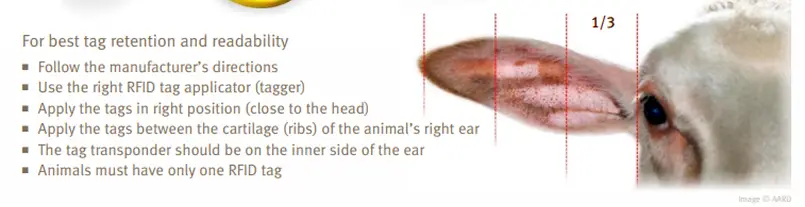
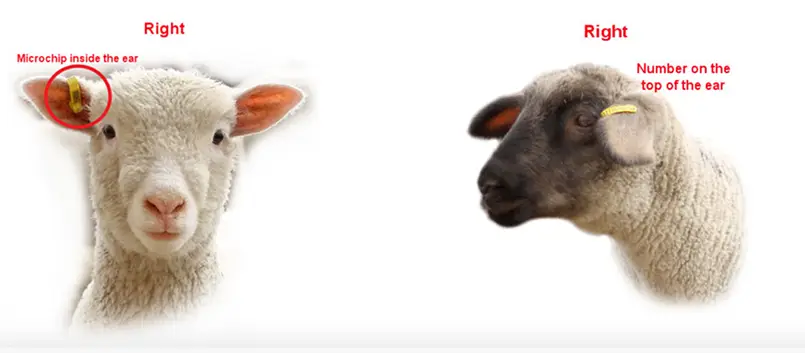
Be sure to use the correct applicator for the type of tags being applied. Tags should always be placed in the third of the ear closest to the head, specifically in the right ear, avoiding piercing cartilage ribs.

For best retention, place tags near the top of the ear, close to the head, leaving enough room for growth if the animal is young. Microchips should be implanted inside the ear—not on the surface where they can be damaged. Incorrectly placed or upside-down tags may rotate, causing irritation or infection.
How to tag Sheep Alberta Lamb Producers